 By Jeremiah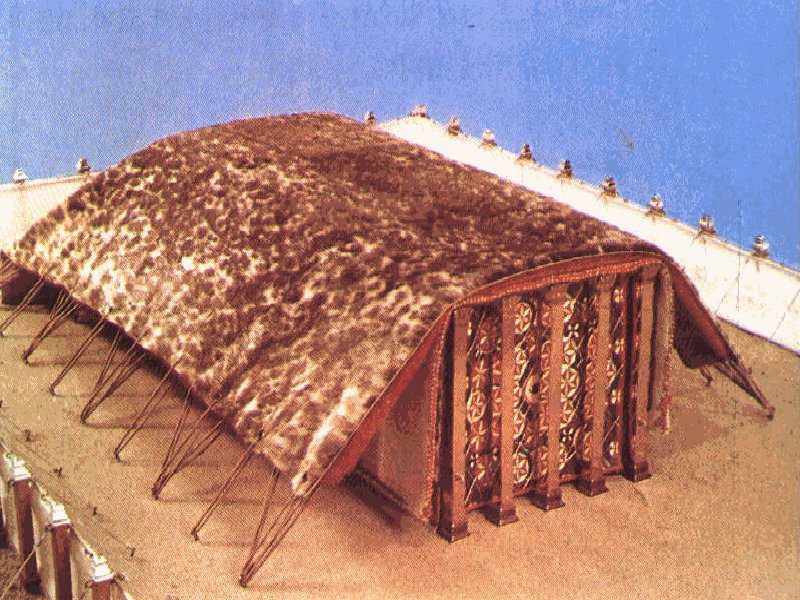
Quest for the Sanctuary
Samuel Wang
- Introduction
My search for the sanctuary started soon after I joined the Seventh-day Adventist church after reading The Great Controversy by Ellen White in 1994. I understand William Miller had a misconception on the sanctuary in Dan. 8:14, mistaking the earth for the sanctuary, a popularly accepted concept at his time, and experienced the great disappointment in October 22, 1844. I also know the story how Hiram Edson, F.B. Hahn and O. R. L. Crosier went across the cornfield the next morning and eventually had an article entitled “The Law of Moses” published on DayStar Extra, Feb. 7, 1846, which unlocked the mystery of the great disappointment, “opened to view a complete system of truth, connected and harmonious”. The discovery of the heavenly sanctuary and its services “ultimately had a profound impact on Adventists and provided the theological foundation for the establishment of the Seventh-day Adventist Church”.
As my experience in Adventism grew over the years, I cannot say I have read extensively, but I have to admit I did read considerable articles, paper and books, also listened and even preached many sermons on the subject of the sanctuary. I understand pretty well, as a general rule, our presentation or exploration on the sanctuary normally starts with what LORD told Moses on the mount, “And let them make me a sanctuary; that I may dwell among them.” (Ex. 25:8). And we usually quote the book of Hebrews to prove there is a heavenly sanctuary, such as “Christ is not entered into the holy places made with hands, which are the figures of the true; but into heaven itself, now to appear in the presence of God for us.” (Heb. 9:24) I understand that Christ has entered into the most holy place and begun the investigative judgment at the very end of 2300-day prophecy, namely, 1844. When Christ comes out of the sanctuary, He is to return gloriously to take His faithful followers from Adam all the way to the very end of the world to Himself, and bring them to heaven.
However, there is still some uneasy feelings regarding the normal presentation on the sanctuary, something seem to be missing. It is not that I do not believe in our sanctuary message, I do and I dare say I am a strong defender of our sanctuary message in my circle. But somehow, I just feel there is something is not quite altogether. All the concepts are there, just not quite together.
Let me be a little more specific.
The true tabernacle is in heaven. It was pitched by the Lord not by man. (Heb. 8:2; 9:24). But it is not clear when and where was it pitched? How did it make it to heaven?
I understand the earthly sanctuary in the wilderness was built according to “the pattern” shewed to Moses in the mount (Ex. 25:9, 40; Heb. 8:5). And I know the heavenly sanctuary was the pattern. Most, if not all, of our teachings on the sanctuary focus on the specific diagram and structure of the earthly sanctuary. Some of our experts can go into almost every little details of the wilderness tabernacle. But when it comes to the real thing, we have much less to say. Some of the reaction goes from the wide range of denying of the heavenly sanctuary all way to spiritualizing everything in connection with it.
I am familiar with this type of approach. You see, I took theology courses on different levels in the seminary in the States before, and know a little bit about systematic theology or integrated theology. What seems strange to me is that these so-called systematic or integrated theology did just the opposite. It does not systematize, but rather itemize and separate everything. It explains to the great details of each and every parts, but can hardly put it back together. To me, it breaks the system. No, at least that is not kind of “integration” I grew up with, coming from a Chinese background and am exposed to holistic integrated imagery thinking all the time in all lines of real life.
You see, a normal man walks normally without the aid of crutches. But when he breaks his leg, let’s be merciful, just one, not two legs. He would need to put on plasterboard and crutches. As recovery comes along the way, he gradually takes off the plasterboard and eventually the crutches, and back to walk normally again. Similarly, when water is pure and clear. You do not use filters. You put filters on because you need to purify the water. Suppose the water is back to pure and clear state again and forever. You take off your filters, back to “normal”.
The earthly tabernacle is a sanctuary with purification system for sin. It is the water system with filters, or a man with plasterboard and crutches. It cannot be the original design, for originally man was pure and sinless. There was no need for purification system for sin. And it cannot be that way forever, for sin will eventually be destroyed and will never rise again.
So, how was the wilderness tabernacle model made after the pattern again? What did the original pattern look like? What is the pattern anyway?
I know Christ’s two phases of ministries in the sanctuary, the daily service and the yearly ministry in the day of atonement as shown in the earthly type. As a matter of fact, as a Chinese, I really did not learn these concepts from the Jewish system, because these services have been handed down in the Chinese history for more than 4,000 years. Morning and evening services are normally performed in each and every family by the head of the household. However, once a year the sacrifice to the God of Heaven, the Creator of heaven, earth and man and everything, was offered by the kings or emperors only, outside of the capital city, traditionally known as “Border Sacrifice”. Of course, the Hebrew record is more clear. It makes great sense to apply these services to the ministries of Jesus, “the desire of all nations” (Hag. 2:7).
I understand Jesus has been interceding for his people in both apartments of the heavenly sanctuary ever since His ascension. Through Him, we are related and connected to the heavenly sanctuary. But how are we related to the heavenly sanctuary after He finishes the final atonement and comes out of it? Moreover, how will we relate to the sanctuary in eternity?
As we all know, the Bible starts off with the garden of Eden in Genesis, and ends with the New Jerusalem, the city of God, coming down from heaven in Revelation. We are encouraged to seek for the kingdom of God and His righteousness first. How is our sanctuary message related to the Garden of Eden, the kingdom of God and the New Jerusalem? Where is the final destination for the redeemed?
When it comes to the sanctuary, our situation is kind of like we know A, and we also know B and C. But we are not quite sure how A and B, and C are related? Are they the same or are the different? Or it can be even more ironically exaggerated, you knew a common object, say, salt. But when you started to learn about NaCl and its structure in chemistry class, then forgot sodium chloride is just another name for salt. It could sound ridiculous. In our case, the word “sanctuary” is more or less an academic name. There might be some common names for it. But we may have just done the same thing, learned the more educated name and could not put it back to its common names.
The bottom line is, do we really know what exactly is the sanctuary? What was its original design and what will it look like forever?
- Starting from Exodus
When talking about the sanctuary, Adventist normally start off with Ex. 25: 8-9. God told Moses to make a sanctuary so He could dwell among the Israelites. But it needs to be made after “the pattern” shewed to him in the mount.
Unknow to some of us, Ex. 25: 8 is not the first time the word “sanctuary” is mentioned in the Bible. As Gilbert rightly points out that its first appearance is in Ex. 15:17, which may well serve as the pattern for the wilderness tabernacle. It reads as follows,
Thou shalt bring them in, and plant them in the mountain of thine inheritance, in the place, O LORD, which thou hast made for thee to dwell in, in the Sanctuary, O LORD, which thy hands have established.
Ex. 15:17
Exodus 15 records the song of Moses after the Israelites miraculously crossed the red sea, and Pharaoh’s army was buried in the water. It is the song of deliverance. Moses was supposed to take the Israelites to the land of Canaan. However, under inspiration, Moses voiced out the final destination is not the earthly Canaan, but the “the mountain of thine inheritance”, the place for God’s own dwelling, the Sanctuary, “which thy hands have established”.
As a matter of fact, the sanctuary concept already appeared even before verse 17. In verse 13, it reads, “Thou in thy mercy hast led forth the people which thou hast redeemed: thou hast guided them in thy strength unto thy holy habitation.” (Ex. 15:13).
With this song of deliverance, we can safely derive a definition for the sanctuary. It is, 1) God’s “holy habitation”, 2) His own dwelling place, 3) His hands “have established”. 4) Its outlook is like a mountain. 5)The sanctuary is also a place God built to be with His “inheritance”, the covenanted people of God.
The book of Hebrews gives us a glimpse of the dreams of the patriarchs, from Abel, Enoch, Noah, to Abraham, Isaac and Jacob. All had an understanding that they were “strangers and pilgrims on the earth”, seeking a country, “a better country, that is, a heavenly: wherefore God is not ashamed to be called their God: for he hath prepared for them a city.” (Heb. 11: 14, 16).
To them, the dream destination is “a better country”, a heavenly city, God “hath prepared for them”. By comparison we know that the sanctuary and “the heavenly city” is one and the same place, prepared by God for His people.
A question would naturally arise, when and where did God prepare or establish such a place for His people? This question would take us back to the book of Genesis to find the answer.
- Back to Genesis
Genesis 1 is an overview of the creation of God. Genesis 2 presents the three most important items, namely, Sabbath, the creation of man and the woman and the setup of the garden of Eden. Right after the creation of man in Gen. 2:7, the Bible describes how the Lord set up the garden of Eden (Gen. 2:8), “even as the garden of the LORD”. (Gen. 13:10).
- The Setup of the Garden of Eden
“And the LORD God planted a garden eastward in Eden; and there he put the man whom he had formed….And a river went out of Eden to water the garden; and from thence it was parted, and became into four heads.” (Gen. 2:8,10).
The garden of Eden was planted by the Lord, it was certainly “pitched” by the Lord, and is called “the garden of the Lord”(Gen. 13:10). From the garden flows the water which became the source of four river heads, showing the garden of Eden must be on “the high places of the earth”(Isa. 58:14). “And the LORD God took the man, and put him into the garden of Eden” (Gen.2:15), so it can also be called “the mountain of thine inheritance.”
In the beginning, the garden of Eden was the only place where there was man. Naturally, it was the capital city of the earth. It was where God met with His created man. In fact, an inspired writer of the Bible actually confirms that “A glorious high throne from the beginning is the place of our sanctuary.” (Jere. 17:12). It does not take a prophet to see the garden of Eden carries all the characteristics of the sanctuary as defined and derived from Exodus 15, as shown above.
In his narrative on the fall of Lucifer, Ezekiel borrowed “the Eden the garden of God” to describe the place where Lucifer used to serve (Ezek. 28:13). Notice the prophet also used “the holy mountain of God” (Ezek. 28:14), “the mountain of God” (Ezek. 28:16) to refer to the same place. Moreover, the prophet continued to say the multitude of Satan’s iniquities “hast defiled thy sanctuaries” (Ezek. 28: 18), making an equation that Eden-like mountain of God in heaven was actually the sanctuary where Lucifer used to serve.
Table 1. The Sanctuary and the Garden of Eden Compared
| Sanctuary (Exodus 15) | Garden of Eden | |
| 1 | God’s holy habitation | The garden of the Lord (Gen 2:8) |
| 2 | His own dwelling place | God’s throne and God’s sanctuary (Jere. 17:12)
Eden the garden of God (Ezek. 28:13) |
| 3 | His hands have established | The LORD God planted (Gen. 2:8) |
| 4 | Outlook like a mountain | Like a mountain for water coming down becoming four rivers (Gen. 2:10)
The holy mountain of God (Ezek. 28:14) |
| 5 | For his inheritance | Adam was transferred there. (Gen 2:15) |
It is, therefore, evident that the garden of Eden is the sanctuary on earth from the beginning.
It should also be noted that there are two special trees “the tree of life also in the midst of the garden, and the tree of knowledge of good and evil.” (Gen. 2:9) We shall come back to these two trees for their special significance as we go along in our exploration. Suffice it is to point out it is the tree of life that is in the midst of the garden, and the specific location of the tree of knowledge of good and evil remains unknown, “away from the focal point of the garden, so that temptation and danger were far removed.” Ellen White also confirms that “God would not permit Satan to follow the holy pair with continual temptations. He could have access to them only at the tree of knowledge of good and evil.” If Adam and the woman obeyed God’s command, they would remain safe.
- The Hidden Sanctuary Service in Eden
An important principle of the plan of redemption was revealed through Paul. He wrote,
“Now to him that is of power to stablish you according to my gospel, and the preaching of Jesus Christ, according to the revelation of the mystery, which was kept secret since the world began, But now is made manifest, and by the scriptures of the prophets, according to the commandment of the everlasting God, made known to all nations for the obedience of faith: To God only wise, be glory through Jesus Christ for ever. Amen.”
Rom. 16:25-27
According to this passage, the gospel was a mystery, which was kept secret since the world began, not only a mystery to the Jews who appeared after the flood, but to all humanity ever since Adam, but was made manifest on the cross. In other words, the light from the cross will unlock the mystery kept secret from the beginning. The world began with the creation. So it seems to be reasonable to look for the mystery in the week of creation, especially, in the garden of Eden.
“The system of education instituted at the beginning of the world was to be a model for man throughout all aftertime. As an illustration of its principles a model school was established in Eden, the home of our first parents. The Garden of Eden was the schoolroom, nature was the lesson book, the Creator Himself was the instructor, and the parents of the human family were the students.”
The Bible did not give a specific timing for the planting of the garden of Eden although its location was identified. However, if the order of the new heaven and new earth can be used as a reference, it is the New Jerusalem that is located first and then the new earth (Rev. 21:1-2). It becomes more interesting if we start to consider the foundations of the earth. The holy city is one with foundations. (Rev. 21:14; cf. Heb. 11:10). “Of old hast thou laid the foundation of the earth: and the heavens are the work of thy hands.” (Ps. 102:25; cf Pro. 8:29). “Who laid the foundations of the earth, that it should not be removed for ever.” (Ps. 104:5). Would it be possible that the garden and the earth share the same “foundations”? Genesis 2 was not written chronologically. The Sabbath was made on the seventh day. Adam and the woman were created on the sixth day. It seems to be reasonable that the garden of Eden was planted before Adam was created so he would be placed in the garden as soon as he was created (Gen. 2:15). Just like one could build a garage first before he goes out to purchase a car and pull it in there, not to build the garage after the car is purchased. That is just the common sense.
It is well understood that the plan of salvation is illustrated in the sanctuary. Given the fact that the garden of Eden is the sanctuary, it would be reasonable to expect the plan of salvation be delineated in the events that took place in the garden, even though it would be hidden. As it is known that Adam “is the figure of him that was to come” (Rom. 5:14), we should be able to draw some parallels between Adam and Christ.
Adam was made from the dust (Gen. 2:7). But “a body hast thou prepared” for Jesus (Heb. 10:5). Adam was created in the image of God (Gen. 1: 26, 27). Jesus was “the express image” of God (Col. 1: 15; Heb. 1: 3).
It should be noted that Adam was made outside of Eden, and he was placed in the garden of Eden after he was made (Gen. 2: 7, 15). Since Eden was placed on a high mountain as mentioned above, Adam was carried to the garden sinless. In like manner, Jesus ascended to heaven sinless, offering Himself as the sacrifice for the world.
The Bible uses the imagery of a woman to represent the church (Rom. 7:1-6; 2 Cor. 11:2, Eph. 5:23-32; Gal. 4:21-31; Rev. 12:1-17). Technically, the church becomes the body of Christ after going through death and resurrection (Rom. 6:3-8), which is symbolized by baptism.
More ink was poured in the narrative of the creation of the woman in Genesis 2. Different from man, the woman was made right in the garden. The Bible records the steps taken in the creation of the woman. Immediately after Adam was told the command concerning the tree of knowledge of good and evil, the LORD God said, “It is not good that the man should be alone; and I will make him an help meet for him.” (Gen. 2:18). But how to convey this idea to the newly created Adam, who was probably a bit carried away by seeing the beautiful scenery, and hearing the beautiful songs of the birds and smelling the fragrance of the flowers in the garden, a natural response for anyone who sees a beautiful scene. The LORD God had a plan. Adam was assigned the job to name all the animals God had created. The intended result was secured as Adam awakened to the fact that “there was not found an help meet for him.” (Gen. 2:19-20). Now the creation of the woman was in order.
The LORD God “caused a deep sleep to fall upon Adam, and he slept;”. And then, the LORD God performed a surgery, “took one of his ribs, and closed up the flesh instead thereof.” (Gen. 2:21). With the rib “which the LORD God had taken from man, made he a woman, and brought unto the man.” (Gen. 2:22). Adam then exclaimed with the first human poem, “This is now bone of my bones, and flesh of my flesh: she shall be called Woman, because she was taken out of Man.” (Gen. 2:23). The whole process ended with a conclusion, “Therefore shall a man leave his father and his mother, and shall cleave unto his wife: and they shall be one flesh.” (Gen. 2:24).
The plain fact that Adam did not have “his father and his mother” to leave from confirms that this conclusion is not talking about human marriage. This observation did not hit me till fifteen years after I failed to explain this verse to a potential donor who pledged $30,000 for a printing project, back in 1998, with an unstated condition that a satisfactory explanation of Gen 2:24 be given to him. Because he was planning to build a big mansion so his two sons and their children could all live together. Five generations under the same roof, typical old style Chinese tradition. Basically, you live with your family till you pass away. Many have used this verse to persuade him not to do so, because, according to them, the Bible teaches the young couple should leave their parents and live separately. But as stated above, Gen. 2:24 was not about human marriage, especially not about whether young couples should or should not live together with their parents. A spiritual explanation should be sought instead.
In his epistle to the church at Ephesus, Paul dealt with the husband and wife relationship and concluded by saying quoting Gen. 2: 24. He wrote,
“For we are members of his body, of his flesh, and of his bones. For this cause shall a man leave his father and mother, and shall be joined unto his wife, and they two shall be one flesh. This is a great mystery: but I speak concerning Christ and the church.
Eph. 5:30-32
Following Paul’s lead, it seems plausible that “a great mystery” was hidden in the creation of the woman, a mystery, “which was kept secret since the world began”(Rom. 16:25). A closer look reveals that the plan of redemption is hidden in the above steps. The fact that the first Adam was not spoken into existence, but “formed” of the dust of the ground typifies that God would prepare a body for the Second Adam, Jesus (Heb. 10:5), as mentioned above. The creation of the woman typifies that though the world was “created by him, and for him”, yet God (Christ) made “an help meet” (the church) to help Him. Adam and the woman represent Christ and His church (Eph. 5: 31,32). Adam’s agreement to God’s plan and his cooperation in allowing God to put him into sleep symbolizes Christ’s obedience to the Father’s will. Sleep is often used as an imagery for death (Gen. 47:30; 2Sam. 7:12; 1Kg. 2:10; Dan. 12:2; 1 Cor.15:51-52). So the “deep sleep” on Adam would well represent the death of Jesus. “The rib” , taking from the side of Adam, may well point to the piercing of the Roman solider on Jesus’ side after He had already died on the cross (John 18:34). The act of brings “her unto the man” suggests Adam was awoken from the sleep, a vivid symbol for the resurrection of Jesus. Hence, the plan of redemption is well represented, though “kept secret”, in the process of the creation of the woman. Furthermore, in the one flesh of Adam and the woman is found a hidden mystery—the intimate relationship between Christ and the church (Eph. 5:31).
The above correlation can be summarized in the following chart:
Table 2. Comparison of the First and the Second Adam
| The First Adam | The Second Adam |
| Body made of the dust of the ground (Gen. 2:7) | “but a body hast thou prepared me” (Heb. 10:5) |
| Made in the image of God (Gen. 1:26, 28) | express image of God (Heb. 1:3) |
| And the LORD God caused a deep sleep to fall upon Adam (Gen. 2:21) | And being found in fashion as a man, he humbled himself, and became obedient unto death (Phil. 2:8) |
| and he slept (Gen. 2:21) | even the death of the cross (Phil. 2:8) |
| and he took one of his ribs, and closed up the flesh instead thereof; (Gen. 2:21) | “But one of the soldiers with a spear pierced his side, and forthwith came there out blood and water;” (John 18:34) |
| And the rib, which the LORD God had taken from man, made he a woman (Gen. 2:22) | For we are members of his body, of his flesh, and of his bones. (Eph. 5:30) |
| and brought her unto the man (Gen. 2:22) | The resurrection of Jesus (Matt. 28:5-6; Mk. 16:6; Lk. 24:6-7; 1Cor. 15:3-4) |
| Therefore shall a man leave his father and his mother, and shall cleave unto his wife: and they shall be one flesh. (Gen. 2:24) | This is a great mystery: but I speak concerning Christ and the church. (Eph. 5:32) |
This testifies that the plan of salvation is not an afterthought. Ellen White puts it nicely,
“The plan for our redemption was not an afterthought, a plan formulated after the fall of Adam. It was a revelation of “the mystery which hath been kept in silence through times eternal.” Romans 16:25, R. V. It was an unfolding of the principles that from eternal ages have been the foundation of God’s throne. From the beginning, God and Christ knew of the apostasy of Satan, and of the fall of man through the deceptive power of the apostate. God did not ordain that sin should exist, but He foresaw its existence, and made provision to meet the terrible emergency.”
Looking from the perspective of the sanctuary, one will not fail to see that Adam was the first priest who offered himself as the sacrifice so that the woman could be made. The point to be noted is that the woman was created in the garden of Eden, by the blood of Adam, so to speak, so is the church redeemed through and regenerated by the sacrifice and blood of Jesus, which was offered to the heavenly sanctuary. Even the ascension of Adam to the garden may allude to the ascension of Jesus to the heavenly sanctuary.
- Eden the Legislative Court
The garden of Eden was not only the birthplace of the woman. It was also the legislative center for the earth. It was in Eden that the great constitution for the earth was made.
Genesis Two begins with the setting up of the Sabbath institution.
“Thus the heavens and the earth were finished, and all the host of them. And on the seventh day God ended his work which he had made; and he rested on the seventh day from all his work which he had made. And God blessed the seventh day, and sanctified it: because that in it he had rested from all his work which God created and made.” Gen. 2:1-3
In fact, before the seventh day Sabbath was made, another institution was setup after the woman was created, the marriage institution of man and woman. “Therefore shall a man leave his father and his mother, and shall cleave unto his wife: and they shall be one flesh.” (Gen. 2:24). As we shall see in this paper, the imagery of marriage goes through the Bible.
The marriage institution was set up on the sixth day of the creation week, and the Sabbath was made on the seventh day. We have reason to believe that the inspired writer put the Sabbath before marriage to highlight the two fundamental principles in God’s commandments in their proper order.
“Jesus said unto him, Thou shalt love the Lord thy God with all thy heart, and with all thy soul, and with all thy mind. This is the first and great commandment. And the second is like unto it, Thou shalt love thy neighbour as thyself. On these two commandments hang all the law and the prophets.” Matt. 22: 37-40
The Sabbath is certainly the first and great commandment, for it establishes the relationship man would have with his Creator. Love to the neighbour is the second commandment. In Adam’s case, the woman was a part of himself. The very fact that these two laws were made in Eden shows that the garden of Eden is the legislative center of the earth.
With the understanding in the process of the creation of the woman is hidden the plan of salvation, Sabbath commandment was made not only for the memorial of the creation but also of the redemption. It is important to remember that God made known of His law in the garden of Eden. Later, we shall see that God declared His ten commandments on a mount Sinai, reminiscent of the legislative center of Eden, further affirming that Eden was a legislation center.
- Two Phases of Judgment in the Garden of Eden
After Adam was transferred to Eden, the Lord immediately instructed him concerning the tree of knowledge of good and evil (Gen. 2: 16, 17). That can be rightfully called the first lesson, or the first truth. It outlines a general principle for life. It was taught even before the marriage and Sabbath institutions were implemented.
However, both the woman and Adam sinned. The temptation and fall happened at the tree of knowledge of good and evil (Gen. 3: 1-7). So did the judgment take place right around the forbidden tree (Gen. 3: 8-9). The call, “Where art thou?”, was to summon the suspect to appear for court investigation (Gen. 3: 9). When Adam and the woman came out from hiding, the Lord started the court investigation on sins they committed (Gen. 3: 10-13).
It is worth noting that the forbidden tree reveals a knowledge of good and evil, just like the law reveals what is right and what is wrong. “I had not known sin, but by the law” (Rom. 7: 7). Therefore, it evinces that the principle of the law is embedded in this special tree. Symbolically, the authority of the Lawmaker is also associated with this particular tree. It is small wonder that investigation and judgment were held right around the tree of knowledge of good and evil. Furthermore, it is not only mankind, but Serpent (Satan) also, was judged in the same court room, so to speak (Gen. 3:14-19).
We should also be reminded that the judgment of Satan and that of Adam and the woman were conducted within different frameworks. Kessler suggests that “The hearing was ended but only the serpent was to hear the sentence.” Because the Serpent, or Satan, had a criminal record before that (Rev. 12:7-9). The judgment of the Serpent was direct and with punitive result (Gen. 3:14). While the judgment of the first couple was announced in connection with the provision of the gospel (Gen. 3: 15), sentences were declared on both the woman and Adam, but their final fate will depend upon how they would respond to the gospel. These two stages of judgment are echoed in Revelation as “the hour of judgment” within the framework of the everlasting gospel and the direct and punitive judgment during the millennium (Rev. 14: 6-7; 20: 4-5).
- Eden Before the Flood
There is no record of the first sacrifice after sin in the Bible. However, the fact that “LORD God make coats of skins, and clothed them.”(Gen. 3: 21) implies that “God made a sacrifice to atone for their sins and they were wearing the coats from the animals that had been sacrificed.”
Ellen White distinctively penned the purpose of the sacrificial system.
“The sacrificial offerings were ordained by God to be to man a perpetual reminder and a penitential acknowledgment of his sin and a confession of his faith in the promised Redeemer. They were intended to impress upon the fallen race the solemn truth that it was sin that caused death.”
She further pointed out the first sacrificial animal was killed by Adam. “This scene gave him a deeper and more vivid sense of the greatness of his transgression, which nothing but the death of God’s dear Son could expiate.” Genesis does not tell clearly whether the animal was offered within or without the garden. But the “coat of skins” were made for them for protection outside of the garden. Ellen White commented,
“In humility and unutterable sadness they bade farewell to their beautiful home and went forth to dwell upon the earth, where rested the curse of sin. The atmosphere, once so mild and uniform in temperature, was now subject to marked changes, and the Lord mercifully provided them with a garment of skins as a protection from the extremes of heat and cold. ”
This reasoning is in harmony with the sacrifice offered by Cain and Abel outside of the eastern gate of Eden (Gen. 4: 3, 16), as well as the altar of sacrifice made to the tabernacle in the wilderness.
After Adam and Eve were expelled from the paradise, the garden of Eden continued to remain on the earth. According to the genealogy of Genesis 5, 1656 years would have passed before the flood came when Noah was six hundred years old (Gen. 6:6). To put things in perspective, think about Rome. Rome was the capital city for Roman empire till Constantine the Great moved his capital to Byzantium in 330 AD. Seventeen centuries later today, we still remember Rome used to be the capital for Roman empire. That is about the same length of the time Eden was on earth. During those years, generation after generation, people came to the eastern gate of Eden to offer sacrifices. Judging from the layout of the tabernacle in the wilderness, it is easy to see what stands before the altar is the sanctuary. In the same way, all those living before the flood knew from their own experience that Eden was the sanctuary on earth, the original home God prepared for mankind, the dream city to enter.
After Adam died, another event must have encouraged that generation, Enoch walked so closely with God, eventually he was taken back into the paradise, crossing “the bounds of their habitation” (Act. 17:26).
“For three centuries he had walked with God. Day by day he had longed for a closer union; nearer and nearer had grown the communion, until God took him to Himself. He had stood at the threshold of the eternal world, only a step between him and the land of the blest; and now the portals opened, the walk with God, so long pursued on earth, continued, and he passed through the gates of the Holy City–the first from among men to enter there.”
Thus, we see that the era before the flood not only knew the garden of Eden was the sanctuary but also knew through the example of Enoch, all those who were faithful may enter it one day. Ellen White thus wrote,
“The advantages enjoyed by men of that age to gain a knowledge of God through His works have never been equaled since. And so far from being an era of religious darkness, that was an age of great light. All the world had opportunity to receive instruction from Adam, and those who feared the Lord had also Christ and angels for their teachers. And they had a silent witness to the truth, in the garden of God, which for so many centuries remained among men. At the cherubim-guarded gate of Paradise the glory of God was revealed, and hither came the first worshipers. Here their altars were reared, and their offerings presented. It was here that Cain and Abel had brought their sacrifices, and God had condescended to communicate with them.”
It is hard to imagine that one day people will forget that Rome used to be the capital of Roman empire. However, the world, together with the church, has forgotten that the garden of Eden was once its capital city, the sanctuary on earth for more than sixteen centuries!
“It may be that its origins are to be found in the Bible’s assertion that Adam was placed in Eden “to work it and guard it” Gen. 2:15 . This could equally well be construed as a pair of nouns, “for service and guarding,” the former being the usual term for priestly service in the Temple.”
- Eden After the Flood
Regarding the condition on earth at Noah’s time, the Bible left a horrible record, “the LORD saw that the wickedness of man was great in the earth, that that every intent of the thoughts of his heart was only evil continually.” (Gen. 6:5). Practically, the antediluvian world was at an open war with God. As a result, God decided to judge the world with the flood, and to take back His “embassy” on earth, so to speak. In like manner, when two countries are at war with one another, they may call back their ambassadors, close the embassy and move it back to the homeland, if technically possible. It is well understood that the land the embassy occupies belongs to the other country, even though it is within the territories of the host country. Similarly, the garden of Eden belongs to God, even though it was located on the earth. When time is right, relationship repaired, peace restored, God would let it to be planted on the earth again.
Ellen White vividly depicted the Eden sanctuary service before the flood, the withdrawal at the flood, and the restoration of Eden in the future respectively. One can easily detect that. Moreover, she anticipated Eden will be restored, hinting the descending New Jerusalem from heaven is none other than the garden of Eden.
“The Garden of Eden remained upon the earth long after man had become an outcast from its pleasant paths. The fallen race were long permitted to gaze upon the home of innocence, their entrance barred only by the watching angels. At the cherubim-guarded gate of Paradise the divine glory was revealed. Hither came Adam and his sons to worship God. Here they renewed their vows of obedience to that law the transgression of which had banished them from Eden. When the tide of iniquity overspread the world, and the wickedness of men determined their destruction by a flood of waters, the hand that had planted Eden withdrew it from the earth. But in the final restitution, when there shall be “a new heaven and a new earth” (Revelation 21:1), it is to be restored more gloriously adorned than at the beginning.”
For six hundred years before the flood, Noah had witnessed and participated the altar offering outside of Eden sanctuary. He well understood the altar was the place to communicate with God. Now the garden was no more, it would be practically impossible to locate the eastern gate of Eden anymore, but it was still a place to communicate with God. The Bible recorded that when Noah came out the ark, his first move was to build an altar (Gen. 8:20). Ellen White captured the soul cry of Noah.
“In the joy of their release Noah did not forget Him by whose gracious care they had been preserved. His first act after leaving the ark was to build an altar and offer from every kind of clean beast and fowl a sacrifice, thus manifesting his gratitude to God for deliverance and his faith in Christ, the great sacrifice. This offering was pleasing to the Lord; and a blessing resulted, not only to the patriarch and his family, but to all who should live upon the earth. “The Lord smelled a sweet savor; and the Lord said in His heart, I will not again curse the ground any more for man’s sake.”
With the flood came the weather and climate change, constant blue sky gave way to gathering clouds and falling rain, which would fill men with constant terror, from fear of another flood, the Lord comforted the family of Noah by a promise to establish His covenant with them and to “set My bow in the cloud, and it shall be for a token of a covenant between Me and the earth. And it shall come to pass, when I bring a cloud over the earth, that the bow shall be seen in the cloud. . . . And I will look upon it, that I may remember the everlasting covenant between God and every living creature.” (Gen. 9:13-16)
God will not forget, His faithfulness can be trusted. But in order to ensure the family of Noah, He chose to speak in the manner of man. To dispel the possible terror resulting from the gathering clouds, a comforting message would be sent out through the bow. One may ask why would the bow have the connotation of comfort and hope? Would that be the first time Noah would have seen the bow or had he seen it before and each time it appeared, comfort and hope was kindled in his heart for the past six hundred years?
An personal experience happened to me back in March 23, 1995. I was in a very intense situation for some good cause, surrounded by six policemen with guns. For more than half an hour in the moving police car, I was able to see a beautiful rainbow in the sky, however, my friend who was with me could not. I was greatly comforted, the fear vanished as I watched the rainbow the whole time, moving my eyes away from the armed police officers. I decided to search the Bible to find out more about the rainbow. I found the rainbow was mentioned in Genesis, Ezekiel and Revelation. What I found took me by surprise.
John confirmed that “there was a rainbow round about the throne” of God (Rev. 4:3). Ezekiel revealed to us that “as the appearance of the bow that is in the cloud in the day of rain, so was the appearance of the brightness round about [the throne]. This was the appearance of the likeness of the glory of Jehovah.”(Ezek. 1:28). Put these two together, it is not difficult to see the rainbow is the shape of the glory of God. It goes without saying that the glory of God goes with God from eternity. Wherever God is, there is the rainbow-shape glory of God. That rainbow-shape appearance of God goes before the bow in the clouds. It was something that was constantly revealed to the antediluvian world, for the divine glory was revealed “at the cherubim-guarded gate of Paradise. Hither came Adam and his sons to worship God.” In other words, Noah’s family had seen the bowlike “appearance of the likeness of the glory of Jehovah” for centuries before the flood. Noah was comforted as soon as he saw the rainbow again, just like a new born babe will calm down as soon as it hears the heartbeat of the mother again, the one heartbeat he or she is familiar while still in the mother’s womb.
Now Eden was withdrew from the earth. God wanted to make sure that Noah and his descendants understand that the rainbow-shape glory of God, which used to appear at the gate of Eden, was now in heaven. The rainbow would remind them of the glory of God at the Eden gate, “as a token of the mercy of God toward the repentant sinner.” In other words, the rainbow was set in the sky as a reminder of the Eden sanctuary. Whenever the rainbow was seen, people was reminded of the garden of Eden, the original home and final destination.
Over the years, the rainbow has become more meaningful to me. Especially, as I came to understand that the mission and message of the Adventist movement was also prophesised by an angel upon his head was a rainbow (Rev. 10:1), indicating it comes from the throne of God, and it should also reflect the glory of God, as the rainbow is the “appearance of the likeness of the glory of Jehovah”.
However, that memory was not kept long. Just a century from the flood, a group of disobedient descendants of Noah found a place in Shinar and planned to build “a city and a tower, whose top may reach unto heaven” (Gen. 11: 4). The Lord did confound the language of all the earth and “scatter them abroad upon the face of all the earth” (Gen. 11: 9). How would the Eden dream be kept before the people and the path of returning home be continuously revealed? The Lord called Abraham.
When the symbolic meaning of the rainbow is lost sight of, the LORD initiated a new plan. He would continue to keep the Eden sanctuary through the experience of the people. For that, Abraham was called to leave his homeland and migrate to the land of Canaan, reminiscent of the transferring of Adam from the earth into the garden of Eden. The promise to “make of thee a great nation, and I will bless thee, and make thy name great; and thou shalt be a blessing” was more to the “seed of the woman” than to Abraham. Years later, Paul wrote, “Now to Abraham and his seed were the promises made. He saith not, And to seeds, as of many; but as of one, And to thy seed, which is Christ.” (Gal. 3:16). The direction where Abraham pitched his tent is also reminiscent of “a garden eastward in Eden” (Gen. 2:8). The altar Abraham built was east of Bethel, “the house of God”, to continue to pattern after the Eden sanctuary where sacrifice was offered at the eastern gate of Eden (Gen. 12: 8).
Table 3. Eden Sanctuary through Abraham’s Experience
| Adam | Abraham |
| Transferred to Eden. Gen. 2:15. | Called to transfer to Canaan. Gen. 12:1-3. |
| The seed of the woman promised. Gen. 3:15 | The seed promised. Gen. 12:7; Gal. 3:16 |
| Adam killed the first sacrificial animal. | Abraham was about to kill his son. Gen. 22:10. |
| Adam worshipped at the eastern gate of Eden | Abraham built an altar east of Bethel. |
The Lord used Abraham’s experience to highlight the Lamb of God that God would provide Himself for a burnt offering (Gen. 22:8), Isaac exemplified the “the only Begotten Son” of God, while Ishmael hinted the age when of the Lamb of God would die, for Ishmael was born when Abraham was 86 years old, thirteen years older than Isaac, and Abraham was 120 years old when Isaac was offered. Isaac was twenty, and Ishmael was 33 years old at the time of this offering. God revealed the message that it is His Firstborn who would die at the age 33 as a burnt offering, while Abraham’s 33 year old son Ismael and his “only begotten son” Isaac were spared.
However, the lesson on the Eden sanctuary taught through Abraham’s experience was again forgotten in the course of time, especially after the Israelites went down to Egypt and were enslaved. The LORD had to activate a design to preserve the Eden sanctuary pattern before the people, to bring back the era of light before the flood back to the world again.
- Types of the Eden–The Tabernacle and the Temple
When the Israelites were enslaved and forgot about the God of their ancestors in the land of Egypt, God sent Moses to lead them out. On the Passover night, the Israelites left Egypt. So after the army of the Egyptian pharaoh chased them. When they came to the Red Sea, the Lord delivered them through a miracle. When they were out of food, manna came down from heaven six days a week except the seventh day. Three month later, the Israelites came to mount Sinai where a boundary was set, reminiscent of the boundary of Eden, and the Lord spoke to the people out of the fire the ten commandments. In the process of the exodus, the path in the sanctuary was again taught through their living experience, as shown in the following table.
Table 4. The Exodus Experience and the Path in the Sanctuary
| Exodus Experience | Path in the Sanctuary | |
| 1 | Passover lamb | Altar of Offering |
| 2 | Cross the Red Sea | The Laver |
| 3 | Manna from heaven | Show Bread in the Holy Place |
| 4 | Mount Sinai and Ten Commandments | The Tables of Testimony in the Most Holy Place |
The LORD knows the nature of man and how forgetful man is. He well understands how readily un-regenerated men could fall back into idolatry. Before Moses was sent off the mount, the people of the Israelites had already started to worship the golden calf. The Lord knew that the symbolic implications of their experience couldn’t be retained long in their memory, He showed Moses a pattern after which a sanctuary can be built (Ex. 25:40). “And let them make me a sanctuary; that I may dwell among them.” (Ex. 25:8).
The people of Israel were given the privilege to build a sanctuary so that the Lord “may dwell among them.” The sanctuary was built to magnify the name of God as well as for the Lord to “dwell among them.” What a contrast is it with the tower of Babel builders who wanted to build them “a city and a tower, whose top may reach unto heaven”, and to make them a name! (Gen. 11:4-5). For the sanctuary of God is where his name is placed (Deut. 12:5), or his law is placed, therefore is called “the tabernacle, namely, the tent of the testimony”. (Num. 9:15). A name indicates authority and glory. A name carries with it the connotation of the lawmakers, the one who makes the rules.
When Adam was sent out from the holy mount of Eden, he “brought with him beyond the gates of Paradise” two institutions, marriage and Sabbath.In similar manner, Moses came down from the mount Sinai with “the two tables of testimony” (Ex. 32:15). Though not recorded, from the fact that Adam and his sons made sacrifices at the gate of Eden it can be inferred that he was instructed about the sacrificial system before being expelled. Similarly, Moses was instructed the ceremonial and other civil laws which was written in the book of Moses. What differs is that the two original institutions were kept in the original legislative court, the garden of Eden, but there was no place to readily put the two tables of testimony. Therefore, a miniature of the garden of Eden needed to be pitched so that “the words of the covenant, the ten commandments” (Deut. 34:28) can be placed there. Five centuries later, it was for the same reason that David desired to build a temple to place the ark of God, he told Nathan the prophet, “See now, I dwell in a house of cedar, but the ark of God dwelleth within curtains.” (2 Sam. 7:2).
Table 5. Eden and Its Miniature
| Adam and Enoch | Moses | |
| 1 | Spent time with God on the holy mount of Eden | Spent 40 days on the mount with God |
| 2 | Taught of the sacrificial system | Taught of the sanctuary and its services |
| 3 | Came down the mount with two institutions | Came down mount Sinai with two tables of testimony |
| 4 | The two institutions kept in the garden of Eden | Instructed to make a sanctuary according to the pattern shewed on the mount to accommodate the Ten Commandments |
| 5. | Called the son of God | Covenanted people of God |
It should always be remembered that “the most High dwelleth not in temples made with hands” (Act. 7:48; 17:24). He dwells among men through His divine law. In like manner, our bodies are “the temple of the Holy Ghost which is in you” (1Cor. 6:19), because it is “the Spirit of the living God” who “put my laws into their mind, and write them in their hearts”, “not in tables of stone, but in fleshy tables of the heart”, thus “and I will be to them a God, and they shall be to me a people.” (2 Cor. 3:3; Heb. 8:10; 10:16).
The wilderness sanctuary was portable, its structure was delineated item by item in the book of Exodus from chapter 25 to 40. The author of the Hebrews gives a simple and clear description.
“For there was a tabernacle made; the first, wherein was the candlestick, and the table, and the shewbread; which is called the sanctuary. And after the second veil, the tabernacle which is called the Holiest of all; Which had the golden censer, and the ark of the covenant overlaid round about with gold, wherein was the golden pot that had manna, and Aaron’s rod that budded, and the tables of the covenant; And over it the cherubims of glory shadowing the mercyseat; of which we cannot now speak particularly.” Hebrews 9:2-5
The above diagram is well known. Many can even expound the symbolic meanings of each furniture in the plan of salvation very well. However, it is not unusual that many find it difficult to explain the correlation between the type and its pattern, not knowing what exactly the pattern would be. Most, if not all, can see very clearly that the sacrificial animals are types for the real Sacrifice Jesus Christ. They have no difficulty in seeing the altar in the outer courtyard pointing to the cross. In other words, we have both a type and antitype clearly revealed in the Bible. However, when it comes to the pattern for the sanctuary, not many would arrive at the conclusion that the type and its pattern would also be clearly revealed in the same Bible.
Understanding Eden is the pattern and the tabernacle of Moses a miniature of it will help us to see a great deal of the correlation between the two.
The very fact that the cherubim guarded the path to the tree of life could stop Adam from entering the garden again indicates that Eden was a closed city with only one gate open to the east. It was at the eastern gate where Adam and his children came to worship through sacrificial offerings. In similar manner, the wilderness tabernacle was a closed tent with only the eastern gate opened. The altar of burnt offering was situated to the eastern gate of the sanctuary, just like the original offering was conducted to the eastern gate of Eden.
From Eden flows four rivers (Gen. 2:10-14), hinting to the east, west, north and south. It can be further inferred that Adam and his family originally dwelled along the side of the eastern river. They were also separated from the garden of Eden by a river which finds its origin in the mount of Eden. This can be further confirmed by the fact that Cain “went out from the presence of the LORD, and dwelt in the land of Nod, on the east of Eden.” (Gen. 4:16). Cain’s life was spared, his confrontation and communication with the LORD came to an end, but he moved away from the presence of the Lord to live a life in roaming and wandering (Nod). It should be noted that Cain wandered along the east of Eden, presumably along the river flowing from east of Eden. In similar manner, a laver is set between the altar of offering and the eastern gate of the sanctuary in the tabernacle of Moses.
When God sent Adam off the garden, “he placed at the east of the garden of Eden Cherubim, and a flaming sword which turned every way, to keep the way of the tree of life.” (Gen. 3:24). The Cherubim were placed at the eastern gate of Eden, so Adam was denied of the access to the tree of life, which is “in the midst of the garden” (Gen. 2:9). Along with this special tree, “of every tree of the garden thou mayest freely eat”(Gen. 2: 16). It is interesting to see that cross the laver is the first apartment of the model sanctuary. In it is found “the candlestick, and the table, and the shewbread”(Heb. 9:2). Priests could eat in this place (Lev. 7:6). What is even more alarming is the tree-shape candlestick. “And six branches shall come out of the sides of it; three branches of the candlestick out of the one side, and three branches of the candlestick out of the other side: Three bowls made like unto almonds, with a knop and a flower in one branch;”(Ex. 25:32-33). The six branches, the knop and the flowers on each branch clearly presents itself as a tree! It does not take a rocket scientist to associate the candlestick with the tree of life.
For a Chinese mind, to look at something with branches and knops and flowers on it, the thought process immediately connects it with a tree. However, if you only do your word study, you can never put the candlestick and the tree of life together. Strangely enough, the sanctuary model was given mainly for visual thinking, it was given so the people of Israel had something to see and think. Word study alone is not going work out the magic. Simply like that. I could never understand why people could not see a tree in the candlestick.
For an imagery-oriented thinking mind, when you think of honoring your parents, you have many pictures emerging in your mind. Such as talking softly to the parents with your head a bit down, never talking back, always bedient to the parents, buying warm clothes for them for winter, accompanying old parents to walk, attending to their sickbeds, or recalling their instructions after they pass away, etc. You do not just sit down and try to figure out what does the word “honor” mean.
Some see the engraving of the ten commandments on the tables of stones a turning point from knowledge systems based on images to knowledge systems based on words, “bringing with it a diminished capacity to understand visual images.”If that was just the marked beginning, now it is probably more of a reality. God knew what He was doing. He asked the tables of testimony to be placed in the ark of covenant, in a visible and portable tent. Word based thinking is placed within the imagery-oriented thinking.
Many have seen the tree of life in the candlestick, as can be seen from these following quotes.
“The candlestick in the sanctuary was what the tree of life was in the garden; it revealed in a typical form the deep spiritual things of God.”
“Goodenough(1950-51:491) concludes that the Jews who put the menorah on their graves ‘saw in the menorah a symbol of God, the source of their light, their Law, the Tree of Life, the astral path to God.’”
“According to C. Meyers, its iconography suggests a stylized tree of life, symbolizing fertility in nature and the life-giving power of God.”
“It seems that the menorah represented the tree of life, which John saw restored to the holy of holies as the climax of his vision (Rev. 22:2).”
Though the tree of life is in the midst of the garden, the focal point to which access can be made from all directions for sustenance and perpetuation of life, however, it was the tree of knowledge of good and evil, though its location not specified, that was the meditation of Adam and the woman day and night, for it concerns life and death. Of this particular tree, saith the Lord, “thou shalt not eat of it: for in the day that thou eatest thereof thou shalt surely die.”(Gen 2: 16). Evidently, the law of God is mysteriously connected with this tree, for death is the wages of sin, and sin is the transgression of the law. (Rom. 6:23; 1John 4:3). It is “a tree of commandment.” It should be noted that “thou shalt surely die” “did not imply that they were to die on the very day when they partook of the forbidden fruit. But on that day the irrevocable sentence would be pronounced.” As Pentiuc puts it, it means you shall “surely begin to die.” Adam lived 930 years before he died.
What is mysterious about this tree is that life is conditioned to the beholding and contemplating a tree that was associated with death, something God wished man to avoid from the very beginning. On the one hand, the law of God is embedded in this particular tree. Death penalty for any violators demonstrated the honor, power, dignity and authority of the Lawmaker. Life extended to the obedient also exhibited the grace of the Lawmaker. Here in one tree the law and grace were organically interwoven. On the other hand, it was a tree for the garden dwellers to exercise faith, for the reason behind the forbidden consumption of its fruit was not explained. It had to be taken by faith. It is the first truth, even righteousness by faith, ever taught in Eden, before the implementation of the marriage and Sabbath institutions. In contrast, the temptation of the serpent was the first reversion of the first truth, the first false righteousness by faith, removing the condition for righteousness and life.
How were these concepts conveyed in the model sanctuary? First, we see the ten commandments, though graven on table stones, were contained in the wooden ark (Ex. 25:16; 37:1), neatly reflected the notion the law embedded in the tree. The throne of God, mercy seat, was set upon the ark of covenant, indicating the law, or righteousness of God, is “the habitation of thy throne” (Ps. 89:14). There, “mercy and truth are met together; righteousness and peace have kissed each other”(Ps. 85:10).
In the tent made by Moses, there was no stone used for the wall. However, in the temple built by Solomon, great stones were used to make the walls. If only the stones were seen, the representation of the garden of Eden would have been ruined. Careful instructions were given so the picture of the garden could be retained. Though the walls of Solomon were made of stones, in the most holy place, both the floor and the walls were covered with boards of cedar (1Kg 6:16), “And the house, that is, the temple before it, was forty cubits long. And the cedar of the house within was carved with knops and open flowers: all was cedar; there was no stone seen.”(1Kg 6:17-18). Whether from outside or inside, all one could see was wood and flowers, strongly suggestive of a natural garden.
Table 6. Eden the Pattern and the Sanctuary Model
| The Pattern | The Model | |
| 1 | The garden of Eden was closed mount with one gate open on the east side. | The sanctuary was a closed tent with one door open on the east side. |
| 2 | Offering at the Eastern Gate of the garden of Eden | The altar of burnt offering situated at the eastern door of the sanctuary. |
| 3 | Four rivers flowed from Eden where people were supposed to dwell. | Twelves tribes of Israelites were scattered on four directions of the tent. |
| 4 | Water separated the altar from Eden | The laver was placed between the altar and the sanctuary. |
| 5 | Fruit of everything tree and the tree of life in the midst of the garden were meant for food. Garden dwellers have access to these fruit on a daily basis. | The showbread and the tree-shape candlestick in the holy place where food can be consumed. Priests can come to this apartment on a daily basis. |
| 6 | The tree of knowledge of good and evil carries the commandment of God, exhibits the dignity and power of the Lawmaker, and combines the law and grace. | The ten commandments placed in a wooden ark. The top of the ark also serves the seat for the throne of God, a symbol of the dignity and power of God. Together grace and the law are combined. |
| 7 | The forbidden tree shows God’s good wish for man to live, leaving death to Himself should man ever disobey the expressed command. | The mercy seat testifies God’s will not to wish one lost. It points to the death of the Son of God as the source of grace. |
Let it be reiterated that the purpose of building a sanctuary model was to reproduce the era of light before the flood when Eden still remained on earth. The sanctuary model served as a miniature garden of Eden, be it portable or at a fixed location, to ever remind mankind of the purpose of life, to re-enter the garden of Eden, to have access to the tree of life and to restore the relationship with God, and the path to reach it.
Solomon’s temple was destroyed. Ezra took the leadership and built the second temple, yet it was one without a revealed pattern and at a much smaller scale. Many “that had seen the first house, when the foundation of this house was laid before their eyes, wept with a loud voice” (Ezra 3:12). More importantly, there was no ark of covenant in the most holy place, it was an empty temple. The corresponding feature to the original pattern, the garden of Eden, was thus lost. The connection to the garden of Eden was gradually forgotten to the extent that the disciples were only impressed with the stones of the temple, “Master, see what manner of stones and what buildings are here!” (Mk. 13:1) If we understand stone building does not represent the garden of Eden, then it is easier to conceive the answer from Jesus, “Seest thou these great buildings? there shall not be left one stone upon another, that shall not be thrown down.” (Mk. 13:2). When the model in no way represents the pattern, it loses its ground to continue standing before the people. The enlarged temple of Herod was completely destroyed in 70 AD, true to the prophecy of Daniel 9 and the words of Jesus.
- Other Names for the Sanctuary
As it is commonly known that different names can often be used to describe the same object in literature. That rule also applies to the Bible. In the Bible, multiple names are employed to refer to the same sanctuary.
Before crucifixion, Jesus told the disciples that he was to go to “my father’s house”, and He further affirmed that “that where I am, there ye may be also” (John 14:2-3). Based upon this, we can safely say where we will be, that is also where Jesus is today.
What John calls “my Father’s house”, the author of the book of Hebrews describes it as “the sanctuary, and of the true tabernacle, which the Lord pitched, and not man” (Heb. 8:2). Jesus was depicted as going “into heaven itself, now to appear in the presence of God for us” (Heb. 9:24).
Understanding where we will be is where Jesus is now, we find other names for the sanctuary in Hebrews, “mount Sion, and unto the city of the living God, the heavenly Jerusalem” (Heb. 12:22).
Of the heavenly Jerusalem, Revelation has more to say, describing it as “a great and high mountain”, “that great city, the holy Jerusalem”, “having the glory of God”, the rainbow-like appearance, cf. Ezek. 1:28 (Rev. 21:10-11). The holy mount is another name for the sanctuary is evinced in text like “O send out thy light and thy truth: let them lead me; let them bring me unto thy holy hill, and to thy tabernacle.” (Ps. 43:3).
Again, we see in the Old Testament, the city of God is also an expression for the sanctuary, as shown in “there is a river, the streams whereof shall make glad the city of God, the holy place of the tabernacles of the most High.” (Ps. 46:4). It is worthy noting that a river is shown in the city of God and the tabernacle of the most High. Revelation describes the holy city as having not only a river, but its origin and what is on the sides of the river. “And he shewed me a pure river of water of life, clear as crystal, proceeding out of the throne of God and of the Lamb. In the midst of the street of it, and on either side of the river, was there the tree of life,” (Rev. 22:1-2).
Here we see that the river, the throne of God and the tree of life are all there in the city of God, the tabernacle of the most High. It resonates strongly with the river in the garden of Eden (Gen. 2:10), the tree of life in the midst of it (Gen. 2:9), and the glorious high throne from the beginning in the place of our sanctuary (Jere. 17:12).
The river, the trees and the throne of God are components of the city of God, or the tabernacle of God in Revelation 21 and 22, but more direct connection was mentioned in Ezekiel 47, where is seen the eastern gate, the trees and more specifically the river “issued out of the sanctuary” (Ezek. 47:12).
“Look upon Zion, the city of our solemnities: thine eyes shall see Jerusalem a quiet habitation, a tabernacle that shall not be taken down; not one of the stakes thereof shall ever be removed, neither shall any of the cords thereof be broken. But there the glorious LORD will be unto us a place of broad rivers and streams; wherein shall go no galley with oars, neither shall gallant ship pass thereby.” Isa. 33:20-21
The above discussion can be summarized in the following chart.
Table 7. Different Names for the Sanctuary
| No. | Other Names for the Sanctuary | Text |
| 1. | My Father’s House | John 14:2 |
| 2. | The True Tabernacle | Heb. 8:2 |
| 3. | Heaven itself | Heb. 9:24 |
| 4. | The Presence of God | Heb. 9:24 |
| 5. | Mount Sion | Heb. 12:22 |
| 6. | The City of the Living God | Heb. 12:24 |
| 7. | The Heavenly Jerusalem | Heb. 12:24 |
| 8. | A Great and High Mountain | Rev. 21:2 |
| 9. | The Great City | Rev. 21:10 |
| 10. | The Holy Jerusalem | Rev. 21:10 |
| 11. | The Holy Hill | Ps. 43:3 |
| 12. | The Tabernacle of most High | Ps. 46:4 |
The implications of this understanding are manifold. One of the key implications is the congruence of the Bible is found and better appreciated. Man was expelled from the garden of Eden. The plan of salvation is to bring him back to Eden. This goal remains the same throughout the entire Bible, though expressed in different terms. It would also make the meaning of some of the seemingly ambiguous texts obvious. We cite a few instances.
“I will lift up mine eyes unto the hills, from whence cometh my help.” (Ps. 121:1) Why, because “the hills” refers to the holy places of the most High, that is where the throne of God is and where help would come.
“Except the LORD build the house, they labour in vain that build it: except the LORD keep the city, the watchman waketh but in vain.” (Ps. 127:1). The house the LORD built was the garden of Eden, which was withdrew from the earth and kept by the LORD until the day when it will descend from heaven.
“If thou turn away thy foot from the sabbath, from doing thy pleasure on my holy day; and call the sabbath a delight, the holy of the LORD, honourable; and shalt honour him, not doing thine own ways, nor finding thine own pleasure, nor speaking thine own words: Then shalt thou delight thyself in the LORD; and I will cause thee to ride upon the high places of the earth, and feed thee with the heritage of Jacob thy father: for the mouth of the LORD hath spoken it.”
Isa. 58:13-14
The Sabbath was made in the garden of Eden. Those who honor the Sabbath of the Lord is promised to be restored back to Eden. They will “ride upon the high places of the earth, and feed thee with the heritage of Jacob thy father”. What is “the high places of the earth”? The holy places of the most High, the holy mount, the garden of Eden. What is “the heritage of Jacob thy father”, the sanctuary, the holy city of God, the garden of Eden which was designed and pitched to be the original home for man.
The holy place and the most holy place, or the location of the tree of life and that of the tree of knowledge of good and evil, which are on two different levels can be seen from the temple of Solomon. “And the house which king Solomon built for the LORD,” “the height thereof thirty cubits.” (1 Kg. 6:2). “And the oracle in the forepart was twenty cubits in length, and twenty cubits in breadth, and twenty cubits in the height thereof”(1Kg. 6:20). In other words, the difference between the holy place and the most holy place was 10 cubits in height in the temple of Solomon. That helps us to understand why the garden of Eden is called “high places of the earth.”
“And many people shall go and say, Come ye, and let us go up to the mountain of the LORD, to the house of the God of Jacob; and he will teach us of his ways, and we will walk in his paths: for out of Zion shall go forth the law, and the word of the LORD from Jerusalem. ”
Isa. 2:3
This verse is loaded with different imageries and names, but in reality, they all refer to the same place, the garden of Eden, the sanctuary of the most High. It was “at the door of the tabernacle of the congregation before the LORD: where I will meet you, to speak there unto thee.” (Ex. 29:42). The path of the just is outlined in the sanctuary. It is from the most holy place where “I will meet with thee, and I will commune with thee from above the mercy seat, from between the two cherubim which are upon the ark of the testimony, of all things which I will give thee in commandment unto the children of Israel.”(Ex. 25:22).
Even the well-known Psalm 23 will be read and appreciated with fresh new meaning. Man went astray like a sheep from the garden of Eden. The shepherd came and looked for the lost sheep, to bring it back the “green pastures” and “still waters” of Eden. The path of righteousness is well depicted in the sanctuary. The rod, the table and the oil are all imagery of the sanctuary. “The house of the LORD” is to be restored back to the garden of Eden. The lost sheep finally found its eternal home. This poem does not only project poetic imagery, but definite and tangible meaning, because now the reader is equipped with high resolution lens.
Through different imageries and names, the Bible is expounded with one and the same focal theme, restoration of the garden of Eden on earth. Whatever was required of Adam to go back to Eden, the same requirement is placed upon all generations. No difference is made between the old testament times and the new testament times, for all are going to the same destination! There is only one way, one path, for there is only one gate opened till the restoration plan is completed.
But this journey is not complete without determining the relationship between the garden of Eden and the kingdom of God. To that we now turn.
- The Garden of Eden and The Kingdom of God
The above discussion should have made it evident that the garden of Eden was the sanctuary, the true tabernacle “which the Lord pitched, and not man” from the beginning (Heb. 8:2). In fact, it should also have been plain to conceive the garden of Eden as the kingdom of God on earth, for it was the only inhabitation of men on earth. That was where the throne of God located and where God dwelled with men. With the understanding with the Father of lights is “no variableness, neither shadow of turning”(Jas. 1:7), what the kingdom of God was in the beginning will remain to be the kingdom of God ever since and till forever. However, just like the understanding of Eden to be the sanctuary on earth became dim, in like manner, the concept of the kingdom of God also got blurry over time to the extent that we have to prove this to be factual.
The burden of the gospel of Jesus was the kingdom of God from the very beginning. “The time is fulfilled, and the kingdom of God is at hand: repent ye, and believe the gospel.” (Lk. 1:15). In teaching disciples how to pray, the supplication begins with “Thy kingdom come”, and ends with “for thine is the kingdom, and the power, and the glory, for ever” (Matt. 6:10,13). His parables are mostly about the kingdom of heaven (Matthew 13, 22, 25; Mark 4). In all his teaching, Jesus made it clear the final destination is to enter this kingdom (Lk. 16:16). Even at the very end of His teachings, His burden was still on this kingdom, “And this gospel of the kingdom shall be preached in all the world for a witness unto all nations; and then shall the end come” (Matt. 24:14). The kingdom of God and the kingdom of heaven are interchangeable. In terms of its nature and ownership, this is the kingdom of God. But in terms of its location, it is called “the kingdom of heaven”, because it is now sitting in heaven and waiting to descend to earth, but being kept by the Lord for His people till the plan of redemption is accomplished.
When Adam was expelled from the garden of Eden, the Bible used the same word which also means “divorce” to describe the separation of Adam from the garden. “Therefore the LORD God sent him forth from the garden of Eden, to till the ground from whence he was taken.” (Gen. 3:23). The Hebrew word for “sent forth” is “shaw-lakh”, which also appears in Malachi 2:16, where it was used in the sense of “putting away”, separating or divorcing. In this regard, Adam was the bridegroom, and Eden the bride. The exile of Adam is vividly described as being separated or divorced from his wife the Eden. If the first Adam was divorced because of sin, then the second Adam will marry back the Eden on behalf of humanity in the plan of redemption. For this reason, the imagery of wedding and marriage is constantly being employed by Jesus and his disciples to describe the process of the return of the garden of Eden, or kingdom of heaven, to the earth.
“The kingdom of heaven is like unto a certain king, which made a marriage for his son, And sent forth his servants to call them that were bidden to the wedding: and they would not come” (Matt. 22:2-3). In this parable, the king represents the Father, his son Jesus Christ is the bridegroom, “his servants” messengers of the gospel, “they” are the invited guests, referring to the world. Who is the bride that the son is going to marry? The kingdom of heaven!
In Matthew 25, Jesus told another parable to illustrate the kingdom of heaven. Again, the imagery of a wedding is used. “Then shall the kingdom of heaven be likened unto ten virgins, which took their lamps, and went forth to meet the bridegroom. And five of them were wise, and five were foolish” (Matt. 25:1-2). While the bridegroom tarried, “they all slumbered and slept. And at midnight there was a cry made, Behold, the bridegroom cometh; go ye out to meet him” (Matt. 25:5-6). The parable ended with the wise shut in and the foolish kept out. “Watch therefore, for ye know neither the day nor the hour wherein the Son of man cometh.” (Matt. 25:13).
In this parable, the Son of man is the bridegroom, the virgins are all guests for the wedding. What is missing is the bride, which is exactly what the parable is all about, the kingdom of heaven. This thread is continued to be woven into the fabric in the book of Revelation where the bride is clearly uncovered. Writing about Matthew 25, Ellen White had a clear delineation of the events as shown in the parable and Revelation.
In the parable, when the bridegroom came, “they that were ready went in with him to the marriage.” The coming of the bridegroom, here brought to view, takes place before the marriage. The marriage represents the reception by Christ of His kingdom. The Holy City, the New Jerusalem, which is the capital and representative of the kingdom, is called “the bride, the Lamb’s wife.” Said the angel to John: “Come hither, I will show thee the bride, the Lamb’s wife.” “He carried me away in the spirit,” says the prophet, “and showed me that great city, the holy Jerusalem, descending out of heaven from God.” Revelation 21:9, 10. Clearly, then, the bride represents the Holy City, and the virgins that go out to meet the bridegroom are a symbol of the church. In the Revelation the people of God are said to be the guests at the marriage supper. Revelation 19:9. If guests, they cannot be represented also as the bride. Christ, as stated by the prophet Daniel, will receive from the Ancient of Days in heaven, “dominion, and glory, and a kingdom;” He will receive the New Jerusalem, the capital of His kingdom, “prepared as a bride adorned for her husband.” Daniel 7:14; Revelation 21:2. Having received the kingdom, He will come in His glory, as King of kings and Lord of lords, for the redemption of His people, who are to “sit down with Abraham, and Isaac, and Jacob,” at His table in His kingdom (Matthew 8:11; Luke 22:30), to partake of the marriage supper of the Lamb.
Evidently, Christ is the bridegroom, the church are the guests, the bride is the Holy City, the New Jerusalem, the capital and representative of the kingdom. In the parables of Matthew 22 and 25, the bride is the kingdom of God. In Revelation, it is clearly revealed as the New Jerusalem. The wedding takes places between Jesus, the second Adam and the bride, the New Jerusalem. It is to give Christ the legal right to marry the New Jerusalem. And it needs to be noted that although wedding and marriage are closely related, it is important to realize that the wedding, the receiving of the bride goes before the marriage, the reception by Christ of His kingdom, the final coronation of Christ as the King of the city and the earth.
How does the kingdom of God relate to the garden of Eden? A shortcut approach to this question is to look at the invitation Jesus extended to the faithful at His second coming, “Then shall the King say unto them on his right hand, Come, ye blessed of my Father, inherit the kingdom prepared for you from the foundation of the world.” (Matt. 25:34) The faithful is invited to come into the kingdom of God. But this kingdom was prepared for man from the foundation of the world. The only match is the garden of Eden (Gen. 2:8).
The dominion, the glory and the kingdom will be given to Jesus at the close of the investigative judgment. “And there was given him dominion, and glory, and a kingdom, that all people, nations, and languages, should serve him: his dominion is an everlasting dominion, which shall not pass away, and his kingdom that which shall not be destroyed.” (Dan. 7:14). The dominion and the sanctuary are synonymous, as seen in “Judah was his sanctuary, and Israel his dominion.” (Ps. 114:2). It should be noted that Jesus only shared the throne of His Father at His ascension (Heb. 8:1, 12:2), but the promise to the overcomer is to sit in his own throne, indicating He becomes the King at some point. “To him that overcometh will I grant to sit with me in my throne, even as I also overcame, and am set down with my Father in his throne.”(Rev. 3:21, emphasis supplied). At that point, the sanctuary, or the kingdom, is no longer just the kingdom of God the Father alone, but also the kingdom of Christ, “The kingdoms of this world are become the kingdoms of our Lord, and of his Christ; and he shall reign for ever and ever.” (Rev. 11:15). The redeemed shall be called not only the “priests of God”, but also “priests of Christ”, because Christ will receive the kingdom, the glory and the dominion, or the sanctuary (Ps. 114:2; Dan. 7:14), “and shall reign with him a thousand years.” (Rev. 20:6).
Thus we can see, whether starting from the holy city, the New Jerusalem, or from the sanctuary, we will arrive at the same conclusion that the kingdom of God is none other than the garden of Eden. As a matter of fact, the New Jerusalem is the sanctuary, the true tabernacle of God. After seeing the holy city “coming down from God out of heaven,” John heard “a great voice out of heaven saying, Behold, the tabernacle of God is with men, and he will dwell with them, and they shall be his people, and God himself shall be with them, and be their God.” (Rev. 21:2-3).
- Eden Sanctuary and Scholarship
As already shown above, there are scholars who have written about the garden of Eden and seen in it a sacred sanctuary, prototypical sanctuary, or temple-garden, based upon ancient language studies, exploration of archeological sites and intensive comparative textual studies.
For instance, Wenham wrote,
“The garden of Eden is not viewed by the author of Genesis simply as a piece of Mesopotamian farmland, but as an archetypal sanctuary, that is a place where God dwells and where man should worship him. Many of the features of the garden may also be found in later sanctuaries, particularly the tabernacle or Jerusalem temple. These parallels suggest that the garden itself is understood as a sort of sanctuary.”
Alexander, T. Desmond enumerated some helpful lists of these parallels.
- “ Eden and the later sanctuaries were entered from the east and guarded by cherubim (Gen. 3:24; Exod. 25:18–22; 26:31; 36:35; 1 Kgs 6:23–29; 2 Chr. 3:14).18
- The tabernacle menorah (or lampstand) possibly symbolizes the tree of life (Gen. 2:9; 3:22; cf. Exod. 25:31–35).19 Arboreal decorations adorned the temple.20
- The Hebrew verbs ‘ābad, ‘to serve, till’, and šāmar, ‘to keep, observe, guard’, used in God’s command to the man ‘to work it (the garden) and take care of it’ (Gen. 2:15), are found in combination elsewhere in the Pentateuch only in passages that describe the duties of the Levities in the sanctuary (cf. Num. 3:7–8; 8:26; 18:5–6).21
- Gold and onyx, mentioned in Genesis 2:11–12, are used extensively to decorate the later sanctuaries and priestly garments (e.g. Exod. 25:7, 11, 17, 31).22 Gold, in particular, is one of the main materials used in the construction of the tabernacle and the temple.”
Built upon Wenham and others’ studies, Adventist scholar Ángel Manuel Rodríguez also shared similar views, seeing the connection between Eden and the Israelite sanctuary. He thus arrived at his conclusion,
“The narrative of Eden provides some of the most important elements of a theology of the sanctuary and its services in the Israelite system of worship. The linguistic links as well as the usage of similar imagery point to the clear connection between the two of them. This connection is even stronger at a theological level.”
However, Rodriguez’s summary seems to have stopped right there with the studies he relied upon. When it comes to the trilateral relation among Eden, the Israelite sanctuary and the heavenly sanctuary, he has less to say.
In recent years, a more popularized study on the sanctuary was circulated through the Sabbath school quarterly in 2013. It starts with God’s residence and correctly identifies the throne room in Revelation 4 and 5 as the vision of the heavenly sanctuary. Then it moves on to “Heaven” on earth and identifies Eden as the first “sanctuary” and shows a very helpful seven point parallels between the garden of Eden and the wilderness sanctuary, to be followed by copy of the pattern, the model given to Moses. The author made a connection between the heavenly sanctuary and the earthly sanctuary, or pattern and copy, but did not say anything, at least not explicitly, about how did the first Eden “sanctuary” relate to the pattern and copy.
As shown in the above, these parallels are there in the Scriptures, and they are not deeply hidden either. Schachter asked a seemingly interesting question,
“The parallels between the Garden of Eden, the desert Tabernacle and the later Holy Temple in Jerusalem, and other near-eastern sanctuaries are striking. The wonder is why this connection is generally not made.”
My question has been that the parallels between the garden of Eden, the heavenly sanctuary, the New Jerusalem, and the kingdom of God are striking, why this connection is generally not made?
With this question in mind, we now turn to Adventist pioneers and Ellen White.
- Adventist Pioneers and Ellen White on the Eden Sanctuary
It may come as a great surprise for many that the conclusion as presented in this paper is not altogether new to the founding fathers of seventh day Adventist church, especially nothing new to Ellen White, who has consistently written about the Eden theme in all her writings.
In 1846, Joseph Bates published a pamphlet entitled “The Opening Heavens” where he wrote,
John says, “To him that overcometh will I give to eat of the tree of life, which is in the midst of the Paradise of God. And whosoever will, let him take the water of life freely.” Revelation 22:17, 2, 7. Then this “Holy City, new Jerusalem, the Zion of God, the Tabernacle of God, the Bride the Lamb’s Wife, the Mother of us all,” is a City, enclosed with a wall one hundred and forty-four cubits high, which embraces the “garden of Eden, the Paradise of God.” And God calls it his “SANCTUARY.”
Here Bates connected the Holy City, new Jerusalem, the Zion of God, the Tabernacle of God, the Bride the Lamb’s Wife all with the Paradise of God, and equals it the sanctuary of God.
A year later, James White wrote more succinctly that the sanctuary model in the Old Testament was patterned after the Paradise, the garden of Eden, which was taken up from the earth at the time of flood. He wrote,
“Therefore it is clear that Old Jerusalem, its Temple, and the furniture of that Temple, have distinct antitypes in Paradise. That Paradise was taken up from the earth after the fall of man, is plain, as there is no such place on the earth which answers the description of it given by Moses.”
This understanding did not go away with the founding fathers, but continued to appear in the writings of Adventist pioneer authors. In his “The Sanctuary and Twenty Three Hundred Days”, J. N. Andrews wrote,
“Beyond this time of trouble, such as never was, the scenes of the earth made new rise before us. In the midst of that paradise of God, where his saints will ever remain, we behold his glorious sanctuary (Ezekiel 37; Revelation 21:1-4); and here we leave it, content, if we may be of the number who shall serve God in that temple, forever and ever. Revelation 7:13-15. The prophetic views of Moses and of Nathan, respecting God’s sanctuary, will then be fully realized; the Lord will reign forever and ever, and Israel will be planted, to be removed no more. Exodus 15; 1 Samuel 7.” (emphasis supplied).
The Eden sanctuary theme goes throughout the writings of Ellen White. Notice how she describes the first parent of mankind chose their sanctuary, making a connection between the trees and the sanctuary, as demonstrated in the above in this study.
“It was under the trees of Eden that the first dwellers on earth had chosen their sanctuary. There Christ had communed with the father of mankind. When banished from Paradise, our first parents still worshiped in the fields and groves, and there Christ met them with the gospel of His grace.”
Ellen White has already been clear that the plan of salvation is to restore man back to their Eden home.
“He then made known to the angelic choir that a way of escape had been made for lost man; that He had been pleading with His Father, and had obtained permission to give His own life as a ransom for the race, to bear their sins, and take the sentence of death upon Himself, thus opening a way whereby they might, through the merits of His blood, find pardon for past transgressions, and by obedience be brought back to the garden from which they were driven. Then they could again have access to the glorious, immortal fruit of the tree of life to which they had now forfeited all right.”
Again, the Patriarch and Prophets, Ellen White wrote about the purpose of the plan of salvation.
“But God gave His own dear Son–one equal with Himself–to bear the penalty of transgression, and thus He provided a way by which they might be restored to His favor, and brought back to their Eden home. Christ undertook to redeem man and to rescue the world from the grasp of Satan.” (emphasis supplied)
To be restored back to Eden is the keynote of the Bible, especially of the second coming of Christ.
“The doctrine of the second advent is the very keynote of the Sacred Scriptures. From the day when the first pair turned their sorrowing steps from Eden, the children of faith have waited the coming of the Promised One to break the destroyer’s power and bring them again to the lost Paradise. Holy men of old looked forward to the advent of the Messiah in glory, as the consummation of their hope.” (emphasis supplied)
As it is with the purpose of the seconding coming, so it is with purpose of the investigative judgment.
“The deepest interest manifested among men in the decisions of earthly tribunals but faintly represents the interest evinced in the heavenly courts when the names entered in the book of life come up in review before the Judge of all the earth. The divine Intercessor presents the plea that all who have overcome through faith in His blood be forgiven their transgressions, that they be restored to their Eden home, and crowned as joint heirs with Himself to “the first dominion.” Micah 4:8. Satan in his efforts to deceive and tempt our race had thought to frustrate the divine plan in man‘s creation; but Christ now asks that this plan be carried into effect as if man had never fallen. He asks for His people not only pardon and justification, full and complete, but a share in His glory and a seat upon His throne. (emphasis supplied).
Where is the investigative judgment being conducted? While the author of Hebrews points to the sanctuary, the true tabernacle of God, Ellen White plainly wrote it is in the New Jerusalem.
“I believe the Sanctuary, to be cleansed at the end of the 2300 days, is the New Jerusalem Temple, of which Christ is a minister. The Lord shew me in vision, more than one year ago, that Brother Crosier had the true light, on the cleansing of the Sanctuary, and that it was his will, that Brother C. should write out the view which he gave us in the Day-Star, Extra, February 7, 1846. I feel fully authorized by the Lord, to recommend that Extra, to every saint.”
To Ellen White, the New Jerusalem is evidently the garden of Eden, because of the identifiable mark, the tree of life is found in both places.
“In the beginning, man was created in the likeness of God, not only in character, but in form and feature. Sin defaced and almost obliterated the divine image; but Christ came to restore that which had been lost. He will change our vile bodies and fashion them like unto His glorious body. The mortal, corruptible form, devoid of comeliness, once polluted with sin, becomes perfect, beautiful, and immortal. All blemishes and deformities are left in the grave. Restored to the tree of life in the long-lost Eden, the redeemed will “grow up” (Malachi 4:2) to the full stature of the race in its primeval glory.”
With exuberant passion, Ellen White described the picture when the redeemed go to heaven. Notice how she connected the Holy City, the Paradise of God and the kingdom prepared from the foundation of the world all in one paragraph and all refer to the same place.
“Before the ransomed throng is the Holy City. Jesus opens wide the pearly gates, and the nations that have kept the truth enter in. There they behold the Paradise of God, the home of Adam in his innocency. Then that voice, richer than any music that ever fell on mortal ear, is heard, saying: “Your conflict is ended.” “Come, ye blessed of My Father, inherit the kingdom prepared for you from the foundation of the world.” (emphasis supplied).
The long-lasting unchanging love of God is manifested in the fact that He keeps the garden the way it was when Adam was sent forth so that he could recognize it when he finally be brought home.
“Transported with joy, he beholds the trees that were once his delight–the very trees whose fruit he himself had gathered in the days of his innocence and joy. He sees the vines that his own hands have trained, the very flowers that he once loved to care for. His mind grasps the reality of the scene; he comprehends that this is indeed Eden restored, more lovely now than when he was banished from it. The Saviour leads him to the tree of life and plucks the glorious fruit and bids him eat. He looks about him and beholds a multitude of his family redeemed, standing in the Paradise of God.”(emphasis supplied).
These should have been sufficient to show that the pioneers and Ellen White understood very well that the sanctuary Jesus ministers today is the Holy City, the New Jerusalem, the kingdom of heaven, the lost paradise, the garden of Eden. Our sanctuary message is the same with the gospel of the kingdom. The plan of salvation is to restore man back to the Eden home. The seventh day Sabbath was made in the garden of Eden. The glorious second coming of Christ is to bring the redeemed back to Eden. The diagram of the sanctuary was given to simplify the gospel and the plan of salvation. How is it that what is designed to make the gospel simple and clear turned to be tedious and complicated to the extent our sanctuary message loses the beauty of clarity and simplicity? That calls for humble, honest and sincere reflection.
- And I Saw No Temple Therein
According to tradition, the beloved John wrote Revelation around 95 AD, more than 60 years after the Lord’s ascension. As to Daniel, who was shown events onwards from the point of time he was, so was John who was shown two major visions on “things which must shortly come to pass”(Rev. 1:1, 19). First John saw Jesus walking among the candlesticks (Rev. 1:12), or in the holy place of the heavenly sanctuary, where he sent his messages to the seven churches (Revelation 2 and 3). Then in chapter 4, John was called “Come up hither”. As shown above, the most holy place was on a higher ground than the holy place in Solomon’s temple (1Kg 6: 2, 20). So the sight of John moved from the holy place to which the candlestick belongs to the most holy place where the throne of God locates. From there he was shown “things which must be hereafter”, that is, after 95 AD, not going back 60 years ago.
In these visions, John saw the temple furniture, such as candlestick (Rev. 1: 12), the throne of God (Rev. 4:1-3, 5:1, 7; ), altar and golden censer (Rev. 8:3), the temple of God, the altar, the court which is without the temple (Rev. 11: 1-2), and the ark of his testament (Rev. 11:19). However, at the closing chapter of Revelation, John wrote, “And I saw no temple therein: for the Lord God Almighty and the Lamb are the temple of it.” (Rev. 21:22), the familiar temple disappeared, together with its furniture.
As traced in this paper that there was not any temple furniture in the beginning when the garden of Eden was planted (Gen. 2: 8-14). The altar, the court without the temple and temple furniture were implemented because of the need to atone for sin. In other words, the fall of man activated the provisional mechanism God had prepared beforehand. “God did not ordain that sin should exist, but He foresaw its existence, and made provision to meet the terrible emergency.”
What is significant in Revelation is that the furniture in the temple loses its function as soon as that stage of service finishes. In chapter one, Jesus walked among the candlestick (Rev. 1:12), however, the service in the holy place was closed in chapter 3, “and shutteth, and no man openeth.” (Rev. 3:7). At the same time, the door to the most holy place was opened. “Behold, I have set before thee an open door, and no man can shut it.” (Rev. 3:8). Notice why Ellen White makes a connection between Rev. 4:1-3 with Rev. 3:8, the opening of the most holy place.
“There is One who sees it all, and He says, ‘I have set before thee an open door’ [Rev 3:8]. Through this [door] was shown the throne of God, overshadowed by the rainbow of promise [Rev 4:1-3], the token of the everlasting covenant, showing that mercy and truth are together, and drawing from the beholder praise to the Lord” (Ms 27, 1891).
Just like the son of man was brought to the Ancient of Days in Dan. 7:13, “a Lamb as it had been slain” was brought to the “him that sat upon the throne” and took the book out of his right hand. (Rev. 5: 6-7), which was “written within and on the backside, sealed with seven seals.” (Rev. 5: 1).
The opening of the seven seals corresponds to the investigative judgment (Dan. 7:10). When the process is over, the sanctuary is ready to be cleansed, probation closes, “the censer, and filled it with fire of the altar, and cast it into the earth”(Rev. 8:5), indicating another phase of service finishes in the most holy place.
What follows is the seven last plagues and the second coming of Jesus. The sanctuary furniture is again seen in Revelation 20, “and I saw thrones, and they sat upon them, and judgment was given unto them.” (Rev. 20:4). The redeemed will sit on the judgment seats to judge the wicked for one thousand years according to “those things which were written in the books, according to their works.” (Rev. 20:5-6, 12).
In like manner, when the millennium judgment ends, the work in the heavenly temple comes to an end. The entire mechanism for dealing with sin will be completely removed. The sanctuary will then be completely restored to its original state before the fall of man. The New Jerusalem, the garden of Eden is eventually “prepared as a bride adorned for her husband” (Rev. 21:2). Having finished their work in the temple, Jesus and the redeemed will then move out of the city.
“After the judgment of the wicked dead had been finished, at the end of the one thousand years, Jesus left the city, and the saints and a train of the angelic host followed Him. Jesus descended upon a great mountain, which, as soon as His feet touched it, parted asunder and became a mighty plain. Then we looked up and saw the great and beautiful city, with twelve foundations and twelve gates, three on each side, and an angel at each gate. We cried out, “The city! the great city! It is coming down from God out of heaven!” And it came down in all its splendor and dazzling glory, and settled in the mighty plain which Jesus had prepared for it. ”
The marriage supper of the Lamb will then be held before the entire universe. Because of sin, Adam was divorced from the garden of Eden, now Jesus will be married to the holy city, and take her back on behalf of mankind. The marriage supper represents the final coronation of Jesus as the King of the kings, King of the garden of Eden and King of the earth. He is then enthroned and empowered to act as the King of kings, to welcome the redeemed to the beloved city and to punish the wicked in the second death (Rev. 20:14-15; 21:8). When justice has met its requirement, Jesus will create the new heaven and the new earth (Rev. 21:1). “Blessed are the meek: for they shall inherit the earth.”(Matt. 5:5; cf. Ps. 115:16). Then, the double inheritance of the firstborn will be finally realized, to inherit both the holy city and the new earth!
“And I saw no temple therein.” (Rev. 21:22). What John saw in the vision was the restored Eden detached from any mechanism of atonement for sin. However, slight changes can still be detected, while the tree of life remains, the tree of knowledge of good and evil disappears. A ray of light shines on the riddle of the forbidden tree. Jesus was compared with a tree, the vine, and “a tender plant, and as a root out of a dry ground.” (Isa. 53:2). Like the law is contained in the forbidden tree, so was the law hidden in his heart, “I delight to do thy will, O my God: yea, thy law is within my heart.” (Ps. 40:8). The death as associated with the tree of knowledge of good and evil was reserved specifically for and executed on the Son of God. Jesus was hang on the tree, “Who his own self bare our sins in his own body on the tree, that we, being dead to sins, should live unto righteousness: by whose stripes ye were healed.” (1 Pet. 2:24). The very evidence Satan used to accuse God of being selfish turned out to be the strongest proof and argument for the unselfish love of God. The tree of knowledge of good and evil was “ a shadow of things to come; but the body is of Christ.” (Col. 2:17). After stating there is “no temple therein”, John continued to write, “for the Lord God Almighty and the Lamb are the temple of it.” (Rev. 21:22). Yes, the Son of God will remain in the holy city as “the Lamb” , “which taketh away the sin of the world”( John 1:29), permanently in the human form with scars and hole in his body (John 20:27). Jesus will be the living tree of knowledge of good and evil, forever and ever.
“Throughout eternity He will bear in His hands the prints of the cruel nails by which He was transfixed to the cross of Calvary….” writes Ellen White. The prints the cruel nails will serve as a perpetual reminder of the consequences of sin experiment, and “tell the story of man’s wonderful redemption and the dear price by which it was purchased.”
John ended his description of the holy city with such a promising picture, “And there shall be no more curse: but the throne of God and of the Lamb shall be in it; and his servants shall serve him:” (Rev. 22:3). Till then, a full circle has gone through. Ellen White wrote,
“Heaven is a school; its field of study, the universe; its teacher, the Infinite One. A branch of this school was established in Eden; and, the plan of redemption accomplished, education will again be taken up in the Eden school.”
- Conclusion
In this study, the journey was long, but the conclusion is simple and clear. The garden of Eden the LORD God planted in the beginning is the sanctuary, the true tabernacle of God. It was the dwelling place of God and also the original home for our first parents. However, sin has changed everything, a mechanism for atoning sin was activated to be attached to the beautiful garden. Adam and Eve were expelled from the paradise and lost their authorized access to the tree of life. Through the plan of salvation, a way was opened to bring man back the garden of Eden. Adam and his descendants came to the eastern gate of Eden to offer sacrifice and to worship God there. The garden of Eden remained on earth for over sixteen centuries before it was withdrawn from the earth at the time of the flood.
Throughout ages, God tried to use different ways to keep the Eden dream before the people, by placing the rainbow in the sky, by the personal experience of Abraham, even the Exodus experiences. However, this was easily forgotten. So the Lord designed a way to keep the garden of Eden before the eyes of the people by giving them the pattern to build a sanctuary model in the wilderness, later, the temple of God at Solomon’s time, which unfortunately was destroyed by Nebuchadnezzar.
The city of Jerusalem and temple of God was rebuilt, however, the pattern was lost. The second temple did not reflect the garden any more, but rather was replaced with impressive stones, leaving the impression that the temple of God was a stone building to the point that the disciples were proud of the stones of the temple. When the original purpose was completely lost, there was no more legitimate reason for its existence. That empty temple was finally destroyed in 70. AD.
The ascension of Jesus turned the eyes of His followers to the heavenly sanctuary, the real temple of God in heaven, the unseen garden of Eden for centuries, kept there from the time of the flood. The life, death and resurrection on earth and the heavenly ministry of Jesus made manifest the hidden mystery which was kept secret in the garden of Eden from the beginning.
Because the garden of Eden was set on the high places of the earth, the Bible writers also have different names to describe it, such as the holy mount, the mountain of God, the holy city, the temple of God, the sanctuary and true tabernacle of God, the kingdom of God and the New Jerusalem. All these names refer to one and the same thing, the garden of Eden.
Adventist rediscovered the heavenly sanctuary after the great disappointment in 1844. Now with the understanding that sanctuary is none other than the garden of Eden, we can now answer with confidence, built on biblical history and Spirit of Prophecy, that the heavenly sanctuary was pitched in the beginning of the creation week by the Creator Himself. It was taken to heaven and kept there at the time of flood. It is the only kingdom which saves lives, because in it is the tree of life. The goal of salvation is to bring Eden back to earth and bring us in. On a certain day before the close of probation (Act. 17:31; Dan. 8:14), God would begin to check who is qualified to enter the city, thus a process of investigative judgment could be involved. When this process is finished, the forgiven sins of the Eden candidates will be blotted out so they may come in as if they had never sinned, to serve as priests to judge the wicked so the final punishment of all the wicked can be executed fairly in the second death. The new heaven and the new earth will be re-created. The saints will inherit both the garden of Eden and the earth.
From Eden to Eden provides congruence to the entire Bible. Man came from Eden, to Eden man returns, through the plan of redemption. The sanctuary was given to make the gospel simple and clear. Unfortunately, some of us who studied the sanctuary and its structure got lost in the many details and could not come out of it. They could see the trees but not the forest, as the Chinese saying goes. As a result, the clarity and simplicity of the everlasting gospel is lost. The power of the gospel hindered. Should we realize that we are actually returning to the garden of Eden, it would make much more sense to start to live a life as closer as possible to that in Eden before sin crept in, being it be the vegetarian lifestyle or observance of the Sabbath. Adam and his wife were expelled from Eden because of one seemingly small sin. No one should be able to get back to Eden while still holding onto some seemingly small sin. The study of the sanctuary structure enriches the gospel. The realization of the sanctuary is none other than the garden of Eden restores the power and beauty of clarity and simplicity back to the everlasting gospel.